Trusted Key Locksmith Service Team
Local locksmith team
May 21, 2026 11 min read
If you've ever stared at your front door trying to figure out why the locksmith quoted differently for your neighbor's lock than yours, the answer is almost always the hardware itself. Homes along Kinderkamack Road and the older Colonial-era streets off Lincoln Boulevard in Emerson, NJ tell the whole story: some houses still carry heavy-duty mortise lock sets original to their construction, while newer builds or recently renovated ranches rely on standard bored knob locks or deadbolts. Knowing which one you have — and what that means for repair versus replacement — can save you time, money, and a very frustrating afternoon.
This guide breaks down the real differences between a mortise lock and a door knob lock, shows you exactly how to identify what's on your door in under two minutes, and helps you make a smart decision about whether to repair, rekey, or replace. Whether you locked yourself out, are upgrading security after a move, or just noticed something rattling loose, Trusted Key Locksmith is your 24/7 mobile locksmith resource right here in Emerson.
## What Is a Mortise Lock — and How Do You Spot One?
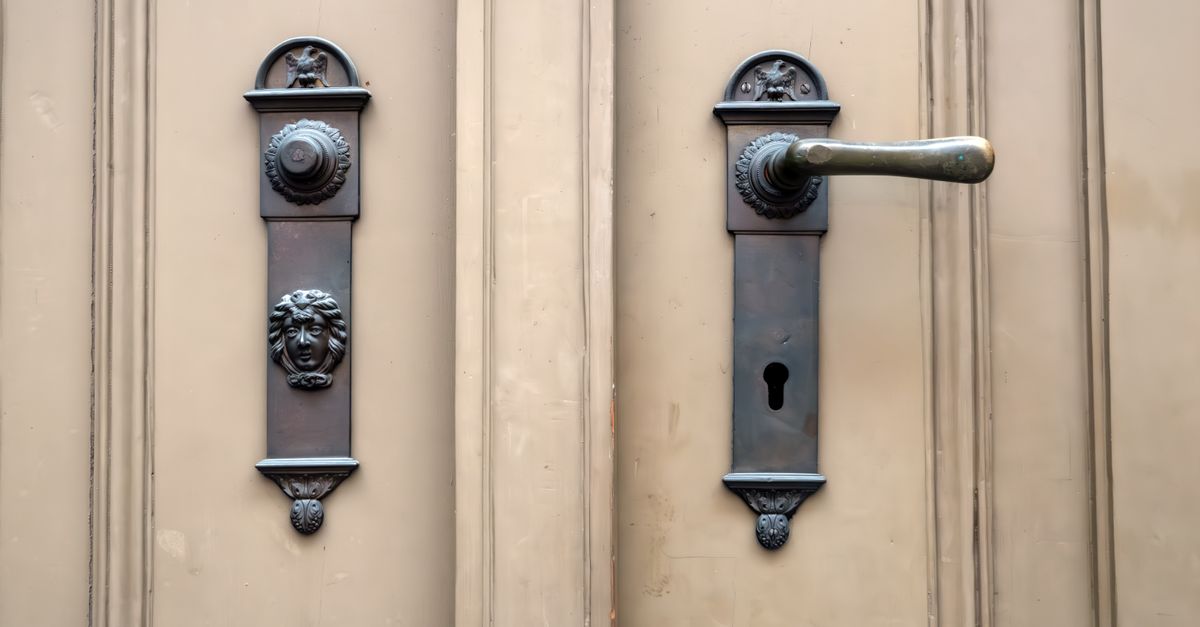
A mortise lock is a complete locking mechanism housed inside a rectangular metal pocket (the 'mortise') that is chiseled directly into the edge of the door. Instead of the two separate pieces you get with a standard knob-and-deadbolt setup, a mortise lock set combines a latch, a deadbolt, and sometimes a lever or knob all in one integrated unit behind a single face plate. You'll typically see it on doors that are at least 1¾ inches thick — common on older Emerson homes built before the 1970s, commercial storefronts, and high-security residential upgrades. The giveaway when you look at your door edge is a tall, narrow face plate (often 7–9 inches long) with two or more bolt openings stacked vertically. On the interior side, the lock body itself sits inside the door rather than protruding from a bored hole, so the trim looks sleek and intentional.
Mortise locks are significantly more pick-resistant and forced-entry-resistant than bored knob locks because the mechanism is recessed and anchored in solid wood or metal, rather than relying on a small cylindrical hole. That makes them a favorite for access control applications — think a brick-and-mortar retail shop on Kinderkamack or a multi-unit residential building where landlords need audit-ready key control. If you're unsure whether you have one, run your finger along the door edge: a single large rectangular plate with two bolt cutouts = mortise. A small round latch plate with one bolt cutout and a separate deadbolt above = bored cylindrical lock setup.
## Door Knob Lock vs. Mortise Lock: The Side-by-Side Reality
The classic door knob with lock — the kind Schlage and Kwikset have sold for decades — works through a bored cylindrical hole drilled straight through the door face. The knob or lever on each side connects to a spring latch that keeps the door closed, and a separate deadbolt (bored above it) provides the real security. A door knob with lock and key is quick to install, widely available at any hardware store, and easy to rekey without special tools. That's its biggest advantage: low upfront complexity and widespread parts availability. Its weakness is that the lock body is exposed on both sides of the door, the strike plate is often secured with short screws, and a knob lock alone — without a deadbolt — offers minimal resistance to kick-in attacks.
A mortise lock set, by contrast, is a longer installation job requiring precise pocket routing, but once it's in, the mechanism is protected by the door's own mass. Repair work on a mortise lock typically means a skilled locksmith disassembling the case to replace worn internals — the cam, the springs, or the cylinder — rather than swapping the whole unit. For Emerson homeowners in older Tudors or Colonials where the door framing is already routed, repairing a mortise lock almost always beats replacing it, because cutting a new mortise pocket into an antique door is expensive and risks structural damage to the stile. On a newer hollow-core door with a bored knob lock, replacement hardware is often the smarter call when the lock is visibly damaged or outdated.
## Repair or Replace? A Practical Decision Guide for Emerson Homeowners
Here's the honest breakdown our team uses when assessing a lock on-site. For a mortise lock: if the cylinder is worn or the key turns but the bolt doesn't throw cleanly, the cylinder or cam is usually the culprit — a targeted repair that preserves your existing hardware and keeps costs focused on labor and a single component. If the entire case is cracked, the spindle is sheared, or the lock has suffered a break-in attempt, replacement of the full mortise lock set makes sense. For a bored door knob lock: if it's a simple rekey after a move or lost key, that's always the right first step — no need to touch the hardware at all. If the knob is loose, the latch doesn't retract smoothly, or the lock is a builder-grade unit with obvious wear, upgrading to a higher-grade knob or lever with a Grade 1 or Grade 2 ANSI rating is a worthwhile residential security investment.
One scenario that surprises homeowners: a knob lock that appears broken is sometimes just a matter of the strike plate shifting as the house settles — common in Bergen County homes that see real freeze-thaw cycles every winter. Before assuming you need new hardware, our locksmiths always check door alignment and strike plate position first. It's a five-minute assessment that can eliminate unnecessary parts costs entirely. If you're unsure and want a professional set of eyes on your door without committing to anything, call (201) 485-3403 — we're available around the clock and will tell you exactly what's needed before any work begins.
## What Locksmiths Can (and Cannot) Open — and Why It Matters
A common question we hear is: what locks can locksmiths not open? The honest answer is that a trained, experienced locksmith can open virtually any residential lock through legitimate non-destructive methods — impressioning, decoding, picking with professional tools, or controlled disassembly — given proper proof of ownership or authorization. The locks that require destructive entry (drilling) are typically high-security cylinders like Medeco or Mul-T-Lock with anti-pick pins, certain electronic deadbolts with no mechanical override, and safes with relockers engaged. Even then, a skilled locksmith Emerson residents call on chooses the method that preserves as much of the hardware as possible. What a locksmith will never do — and what we want to be direct about here — is bypass a lock without ownership verification. We confirm identity and right-of-access before every job, no exceptions.
On the topic of how to pick a door knob lock: it's worth knowing that a standard spring-latch knob lock can be defeated quickly by someone with basic tools, which is precisely why knob locks alone are not considered a security perimeter. Deadbolts, mortise locks, and access control hardware exist for exactly this reason. Rather than detailing bypass techniques, the practical takeaway is this — if you're locked out, check for a spare key with a trusted neighbor, try a secondary entrance, or call a professional immediately. Attempting to force your own door risks damaging the frame, the lock, and potentially alerting neighbors unnecessarily. Our mobile locksmiths carry the equipment to open your door cleanly and get you back inside without property damage.
## Trusted Key Locksmith Emerson: Full-Spectrum Lock Services, 24/7
Whether your concern is a single door knob with lock that stopped working, a full mortise lock set replacement on a historic front door, or a building-wide access control upgrade for a commercial property, our team handles all of it from a fully equipped mobile unit — no waiting for a shop appointment, no third-party technician dispatch. We serve Emerson and the surrounding Bergen County area including Oradell, Westwood, Park Ridge, Dumont, and River Edge, which means a local technician who knows the housing stock and the roads gets to you fast. Here is a clear picture of what we cover: Residential Services: Lockout assistance, door knob lock installation and repair, mortise lock installation and repair, deadbolt installation, lock rekeying, master key system setup, high-security cylinder upgrades, garage door lock service, sliding door lock repair, window lock installation, lock replacement after break-in, new construction lock setup, lock change after tenant turnover. Commercial / Brick-and-Mortar Services: Commercial mortise lock set installation, storefront lock repair, keypad and electronic access control installation, master key and grand master key systems, panic bar / exit device installation and service, cabinet and desk lock service, mailbox lock replacement, commercial rekey after staff changes, file room access control. Automotive Services: Car lockout service, broken key extraction from ignition or door, transponder key programming, duplicate car key cutting, ignition repair and replacement. Surveillance & Security: Security camera consultation and referral coordination, smart lock installation (keypad, Bluetooth, and Z-Wave compatible), and access control integration for residential and commercial doors. Regarding cost — what determines your final quote is the lock type and hardware brand involved, whether parts need to be ordered or are on our truck, the time of day (overnight and holiday calls carry different rates), and travel distance to your location. We confirm an exact up-front price before any work begins, so there are no billing surprises. Call (201) 485-3403 any time — we answer 24/7.
## Emergency Locksmith Response in Emerson and Bergen County
When you're locked out at midnight on a Sunday — or you've just discovered a damaged lock after a suspected break-in attempt — the last thing you need is to navigate a hold queue. As a 24/7 mobile emergency locksmith, we pick up the phone every hour of every day. Emergency locksmith cost is a fair concern: the factors that affect an after-hours call are the same ones that affect any job (lock type, parts needed, distance, time of day), but we are transparent about the rate structure before we dispatch. You'll know your price before we roll, period. We've responded to lockouts on the NJ Transit Pascack Valley Line platform area, late-night commercial lockouts on Kinderkamack Road, and post-storm lock failures when ice jammed mortise mechanisms in older Bergen County homes — our experience covers the real scenarios Emerson residents actually face.
## A Note on 'Hoboken Locksmith' Searches and What That Means for Emerson
If you've ever searched for a Hoboken locksmith and found yourself wondering whether someone that far south serves Emerson — the answer is: coverage area matters enormously for response time and local knowledge. Emerson sits at the northern end of Bergen County, about 22 miles from Hoboken. A locksmith based and operating in our area knows the housing types, the door hardware common to local construction eras, and can reach you significantly faster than a service dispatched from Hudson County. Our team is based here, works here, and prioritizes Bergen County calls. When you need a locksmith Emerson homeowners can count on without a long wait, local presence is the real differentiator — not just a service area checkbox on a website.
Frequently asked questions
What is a mortise lock, and do older Emerson homes commonly have them?+
A mortise lock is a locking mechanism set inside a chiseled pocket in the door edge, combining a latch and deadbolt in one integrated case behind a tall face plate. Yes — many older Emerson homes, particularly Colonials and Tudors built before the 1970s on streets like Lincoln Boulevard and around the historic borough center, were fitted with mortise hardware original to construction. They're durable, but the cylinders and internal cams wear over decades and benefit from a professional inspection every few years.
How much does a locksmith cost in NJ, and what drives the price?+
There's no single flat rate — the final price depends on the type of lock involved (a standard door knob lock rekey is much simpler than a full mortise lock set replacement), whether specialty parts are needed, the time of day, and travel distance to your location. Emergency and overnight calls typically carry a different rate than standard daytime appointments. At Trusted Key Locksmith, we confirm your exact price before any work begins so you're never surprised. Call (201) 485-3403 for a no-obligation assessment.
How much should an emergency locksmith cost, and is there a premium for after-hours calls?+
Emergency locksmith pricing reflects real factors: after-hours dispatch, the complexity of the lock (picking open a bored knob lock differs from opening a high-security mortise lock set), parts required, and distance. What you should expect from any honest locksmith is a clear, confirmed quote before they start — not a low number on the phone followed by add-ons at your door. We give you a firm price upfront, every time, 24 hours a day.
What locks can locksmiths not open without drilling?+
Non-destructive entry is possible on the vast majority of residential locks — including most door knob locks, standard deadbolts, and even many mortise locks — using professional picking, impressioning, or bypass techniques. Locks that may require drilling include very high-security cylinders with anti-pick and anti-drill pins (certain Medeco or Mul-T-Lock cylinders), some electronic locks with no mechanical override, and safes with activated relockers. Even when drilling is the only option, a skilled locksmith minimizes damage and focuses on the cylinder rather than the door hardware, often allowing the lock body to be reused with a new cylinder.